
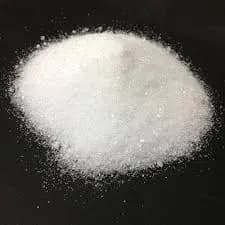
Oxalic Acid (99.6%) - China
- IUPAC Name
- oxalic acid
- Molecular Formula
- C2H2O4
- Molecular Weight (g/mol)
- 90.0400
- Synonyms & Trade Names
- Oxalic acid; Ethanedioic acid; Acidum oxalicum
- Purity / Assay (%)
- 99% min
- Grade / Quality Level
- Technical Grade
Technical Document
Brief Overview
Chemically speaking, oxalic acid is an organic molecule having the formula C2H2O4. It is a reducing agent and a dicarboxylic acid. Depending on the hydrogen bonding, oxalic acid can have either a sheet-like or a chain-like structure. Oxalic acid is hydrophilic and acidic in its anhydrous form. Oxalic acid has a crystalline structure and is a white liquid. It dissolves in water as well. In the wild, it may be found in wood sorrels, parsley, spinach (broccoli, cabbage, and Brussels sprouts), and rhubarb leaves. Certain bacteria oxidize carbohydrates to make oxalic acid. Crystalline oxalic acid is produced by plants in the genus Fenestraria to aid in light transmission for photosynthesis.
Manufacturing Process
For commercial usage, oxalic acid is produced by oxidizing glucose or carbohydrates with air or nitric acid while a catalyst (vanadium pentoxide) is present. Nitric-sulfuric acid combination and molasses/cellulosic wastes can be utilized as raw materials in the production process. First, the nitric acid is introduced to the molasses or cellulosic wastes in a batch procedure. After feeding this mother liquor into a reactor, sulfuric acid is added to raise the reactor's temperature. There are cooling coils here, which circulate a coolant to lower the temperature. Subsequently, the reactor is filled with nitric acid and then gradually filled with sugar.To prevent a sudden rise in temperature, the rate at which sugar is added is increased gradually. After forming oxalic acid, it is centrifuged and purified by employing water to recrystallize it. After additional centrifugation, the product is dried and recrystallized. The response might be expressed as follows:
C6H12O6 + 6 HNO3 → 3 H2C2O4 + 6 NO + 2 H2O