
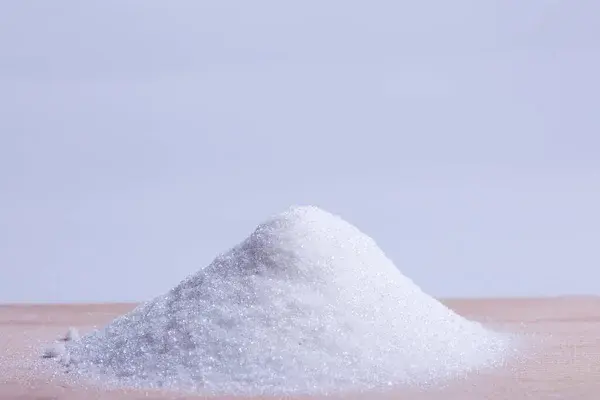
Melamine - Taiwan
- IUPAC Name
- 1,3,5-triazine-2,4,6-triamine
- Molecular Formula
- C3H6N6
- Molecular Weight (g/mol)
- 126.1200
- Synonyms & Trade Names
- Melamine; 1,3,5-Triazine-2,4,6-triamine; Cyanuramide
- Purity / Assay (%)
- 99.8% min
- Grade / Quality Level
- Industrial Grade
Categories
Technical Document
Brief Overview
Another name for the chemical substance melamine is cyanurotriamide, cyanurotriamine, or cyanuramide. Typically, melamine is sold as a white, crystalline powder. Melamine's structure allows it to combine with other chemicals to create products that are robust and long-lasting. Warming it up makes it easily moldable, and room temperature solidifies it into a shape. Melamine is non-hygroscopic and stable. It has to be kept dry, cold, and well-ventilated for storage. When heated over 300 degrees Celsius in an enclosed place, it can be explosive. It also releases harmful fumes that can irritate the skin, eyes, and respiratory system. When handling melamine, safety goggles, respirator protection, and protective gloves are necessary. Melamine is harmless when used normally, however it might be harmful if it's present in food.
Manufacturing Process
One may synthesis melamine from hydrogen cyanide, dicyandiamide, or urea. Urea is the primary component used by the majority of industry today to create melamine. Either high pressure or low pressure conditions might be used for the reaction. Urea is changed into isocyanic acid in the first phase of this process. Isocyanic acid is changed into cyanuric acid during a high pressure reaction, which then combines with ammonia to form melamine. The high pressure reaction happens in the liquid phase and doesn't need a catalyst. Isocyanic acid undergoes a low pressure reaction to produce carbodiimide or cyanamide, which is then transformed into melamine. Using a catalyst, this reaction was carried out in gas phase. In this instance, the catalyst for the reaction is either cyanamide or carbodiimide. Melamine production is essentially an endothermic reaction.